Offer
Provide additional details about the offer you're running.
FLASHSALE

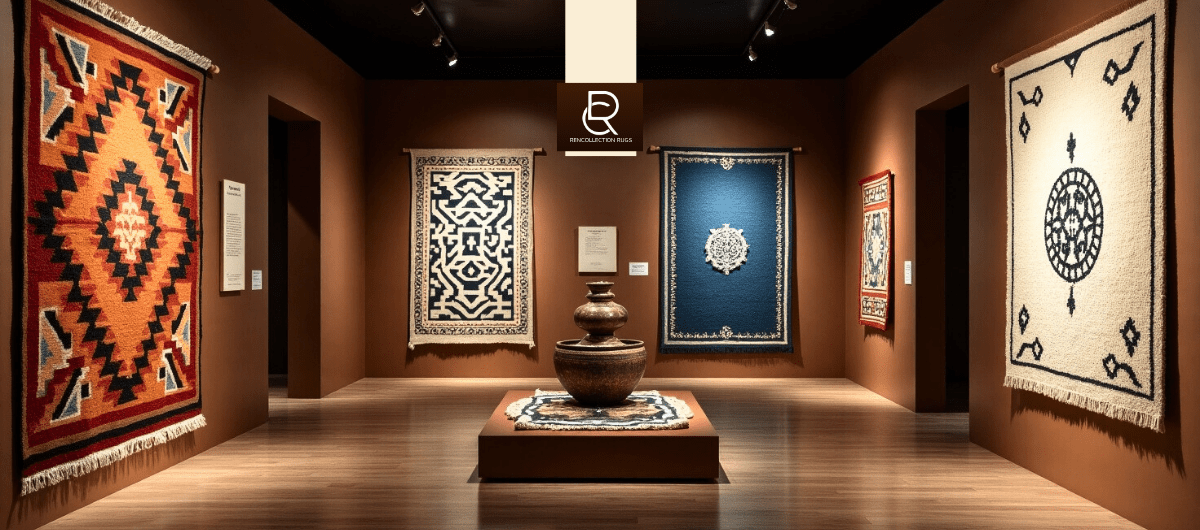
Rugs are not just for making your space look nice. In many cultures, they are regarded as meaningful art carry spiritual and cultural meaning. Color and motif choices in every home reveal who its residents are. You don’t always need to see them right away but people who understand them hear a lot of meaning. When intention is involved in making rugs, they become objects of great importance that highlight beliefs, mark important days and pass on traditions.
You can see spiritual and cultural belief reflected in each thread of religious prayer rugs from the Middle East in tribal textiles in Central Asia and in the designs of Tibetan weavings. We will look at how rug patterns show identity, spiritual beliefs and world perspectives.
Many regular rug patterns are centered on images that have their own meanings. These traces are commonly ascribed roles such as protection, ritual or religion.
Over many cultures, the diamond shape is a regular motif in rugs. The diamond in Native American Navajo rugs stands for the four sacred mountains and the cardinal directions. In these rugs, diamonds are commonly believed to keep away evil and make women fruitful.
The tree of life is a motif seen again and again. In Persian and Turkish rugs, the tree depicts things such as eternal life, the link between the sky and earth and our spiritual movement. Flowers, birds and animals frequently represent different meanings. Peacocks are sometimes connected to beauty, lions with strength and lotus flowers are often a sign of purity and waking up spiritually.
There is a reason behind every symbol chosen. They are carefully planned and are passed on by generations who give every pattern significance.
Color in rug-making is never just about aesthetics. Spiritual ideas or the beliefs of a society are often shown in the colors people use.
Red appears regularly in Persian, Turkish and Central Asian rugs. It stands for bravery, strength and endurance. In Tibetan rugs, red is a symbol of defense and holy meaning. Truth and eternity are connected with blue, a color used to protect from harm caused by the evil eye.
For a lot of Islamic cultures, green has come to symbolize heaven, peace and the fertility of nature. In certain traditions, green is used only for religious or royal events, so you will often only notice it in special settings. White often means purity and naivety but black may represent loss, mystery or safety.
The colors of these textiles are rich because their dyes come from plants, minerals and insects. As the colors fade, many collectors and spiritual followers value their antique look even more.
The symbolism in rug design is easiest to see in prayer rugs. These small, portable rugs are used by Muslims to create a clean and sacred space for prayer.
A common symbol on a prayer rug is a mihrab which is used to guide the worshipper toward where Mecca is. A few use images of mosques, lamps or columns to create an atmosphere reminiscent of a sacred place. These designs are needed for practical reasons and also support focus during ritual prayers.
Apart from Islam, other traditional cultures regard rugs as important in their ceremonies. When meditating, Tibetan monks often use rugs made in bright colors and decorated with the endless knot, the wheel of Dharma or different symbols. The designs of these items help keep your mind at ease as you meditate.
Rugs are often used in many indigenous and tribal communities to show and share their cultural heritage.
Berber women in Morocco create rugs that represent their life stories. They use different symbols to note important events like marriage or growing a family. The style of weaving changes from one region and tribe to another and experienced weavers often expand on old designs to share their lives.
In Central Asia, tribal rugs serve a similar purpose. Motifs in Turkmen and Uzbek rugs can signify the weaver’s clan, marital status, or social role. They are useful as well as valuable, telling the story of daily activities, spiritual beliefs and cultural practices.
Creating a rug in the traditional way can almost become a form of meditation. Making rugs is something many artisans consider to be both a sacred act and a way of showing gratitude. The rhythm of tying knots becomes a ritual and lets you put your intentions into something solid.
Tibetan people think that the rug holds the energy of the person who wove it. If a rug is made with good goals, it is thought to bring balance to the atmosphere at home. As a result, handmade rugs hold added value, as this effect that cannot be replicated by machines.
Over the years, rugs have been used to define space, both physically and spiritually. Whether for religious purposes or given as a bridal present or hung as a display, a well-skim rug keeps more than being a building material, it eventually gains a deeper significance.
When we look at the meaning behind these patterns, we value their appearance and their ideas more. A rug is able to both anchor and enhance any room, as it connects us to the past, reminds us of spiritual beliefs and highlights our drive to create art.


Enjoy an exclusive 5% discount on your first order as a warm welcome from us. Add beauty and comfort to your home—shop now and save!

