Offer
Provide additional details about the offer you're running.
FLASHSALE

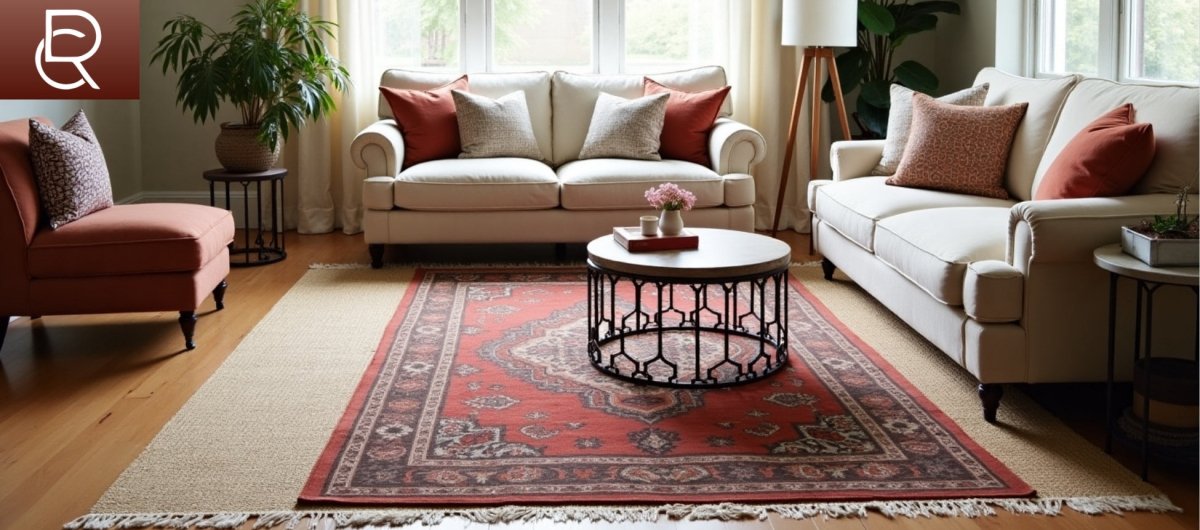
Rug layering is one of the chicest interior design tricks, and nobody even knows that it is simple. An expression of choice that was once in the trend as a dramatic bohemian gesture has quietly transitioned to become an ageless method applied to loft apartments, country cabins, and gracious boutiques as well. Layering rugs can make any room warmer, more textured, deeper, and more personal, especially when done correctly. Layering holds no limits whether you are working with large open spaces, trying to establish a seating area, or plainly wishing to play with shades and designs.
However, the question is how do you begin? Here in this designer guide, we are going to dissect how to layer rugs step by step so that you can make this great design trend with ease and confidence.
Layering rugs is not only about visuals but an analysis of creating a multi-dimensional room that feels curated and lived-in. It allows you to have the freedom to:
The first rug that goes directly on the floor must be bigger and more neutral. Consider jute, sisal, or a low-pile wool in a subtle tone. This serves as an anchor to the room and also provides visual space for your best rug. Your base should extend at least a foot or more beyond the smaller rug that will lie on top of it.
For example, a jute rug in a natural tone is a perfect base in a living room. It is sturdy, affordable, and warm in texture, and complements almost everything you put on top of it.
Your main rug is the one you make a statement with: it is what makes the vibe. This is where you may be able to be creative through color, pattern, and texture. A mini Persian, Moroccan or Turkish rug of RenCollection will add dimension and antiquity to a contemporary area whereas a dramatic geometric format will add an electric spark to a neutral room.
The main guideline is that the top rug has to be in contrast to the base rug. If your base is solid, try a patterned top rug. This comparison maintains a sense of interest in the eye without overwhelming the room.
Layering does not involve the symmetrical piling up of a rug only. Try varieties of sizes and placements. The following are a few winning layouts:
Among the strongest (and yet most disregarded) components of rug layering is texture. The contrast between soft wool, heavy knits, and coarse jute brings a tactile experience that is irresistible.
Warm up a reading nook with a lightweight sheepskin rug or shag rug placed over a flat base. Or go high-contrast with a smooth, minimal-pile vintage rug on top of a thick and braided jute. The visual and physical depth it adds is immediate.
With rugs also, you can create a color story by layering. You can do the same with a throw pillow or with wall art. There is no compulsion that you have to match it, but the tones used must complement the other and your overall decor.
For example, if your base rug is tan or ivory, and if you can get a top rug in deep indigo, rust, or forest green, it will stand out very beautifully. Make one of the colors carefully blend with a piece of your furniture, curtains, or accessories so that there is a cohesive feel.
The most amazing thing about layering the rugs is that it encourages experimentation. Do not be scared of combining all the old and new, classics and moderns, minimal and maximal. The best memorable interiors tend to break the rule a little bit- so let your rug choices reflect your style, not just the design rulebook.
Start with what you love. Do several combinations and stir them up. And all of a sudden, the room won’t simply appear layered; it will feel layered, which is the greatest thing of all.


Enjoy an exclusive 5% discount on your first order as a warm welcome from us. Add beauty and comfort to your home—shop now and save!