Offer
Provide additional details about the offer you're running.
FLASHSALE

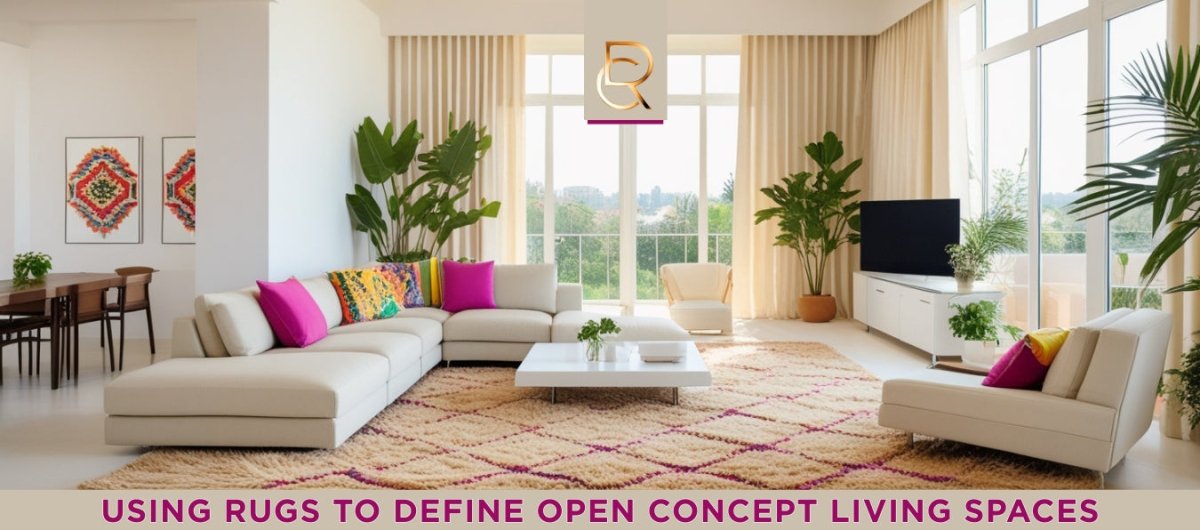
Contemporary home design, featuring open-concept rooms, has become a popular trend in home design today, creating a sense of lightness and airiness while improving natural light circulation and enhancing flexibility. Nevertheless, the walls separating different functional zones, such as the living room, dining area, and kitchen, are absent, making it challenging to establish boundaries and maintain order.
The application of rugs is one of the most powerful means of adding structure and style to such open spaces. The primary purpose of rugs in such spaces is to define activity areas. Every zone, including the living room, dining area, and reading corner, should have a sense of place, which can be defined by a nice rug in its designated spot.
For example, a large (old) rug underneath your seating area in the living room (sofa, chairs, coffee table) serves as the main resting spot. Meanwhile, the dining table is surrounded by a smaller rug, which already suggests a dining space without walls. It appears organized and intentional because it’s clear where the area boundaries are.
The size of the rug in a free space is also essential.
When the rug is too small, it makes the area look disjointed. If it's too large, it can blur the boundaries of the space. A quick solution:
Layering rugs is a designer-approved technique that works particularly well in open-concept spaces. Placing a patterned or colored rug over a large neutral base rug adds depth and dimension.
For example, you might start with a large sisal or jute rug that covers the entire living and dining area. Then, place a vintage Persian rug under your coffee table or a bold geometric carpet under the dining table. Layering adds different textures and tones while keeping a cohesive look.
A common challenge in open layouts is coordinating color across zones. Rugs can act as connectors that repeat or complement colors from one area to the next, creating a seamless transition.
If your kitchen has blue accents, consider a rug in the living area with subtle blue undertones. Or if your dining chairs are earthy terracotta, a rug with warm rust or copper details can tie the look together. This intentional repetition of color through rugs creates a sense of flow and harmony throughout the space.
Yes, you can mix rugs—but do it thoughtfully. To avoid a chaotic look, choose rugs that either share a standard color palette or design style. For example, you can mix a striped flat weave in the kitchen with a floral rug in the lounge if both share similar tones or materials.
If you're unsure, stick to one statement rug and keep the others neutral. This strategy ensures that each space is defined while maintaining a unified aesthetic.
Beyond their visual role, rugs also enhance comfort and acoustics—key in large, echo-prone spaces. A rug underfoot softens hard flooring, reduces noise, and makes each zone feel cozy and livable.
Placing plush rugs in the lounge area invites relaxation, while washable flat weaves work well in dining spaces where spills are likely. And don’t forget hallways—runners in transitional spaces guide movement and bring warmth to walkways.
Open-concept living offers freedom and flexibility, but it requires smart styling to prevent it from feeling chaotic. Rugs are the unsung heroes of spatial design in these settings. They ground furniture, guide the eye, and give every corner a purpose.
By carefully selecting rugs that complement your layout, color palette, and lifestyle, you can define your open-concept space with elegance and clarity, proving that sometimes the best design elements aren't walls at all.
Ready to style your space like a pro?
Shop Now and discover timeless rugs at RenCollection that bring beauty, balance, and purpose to every open space.


Enjoy an exclusive 5% discount on your first order as a warm welcome from us. Add beauty and comfort to your home—shop now and save!